Why PokeSurvivor Is Worth Trying: Learning a Build One Decision at a Time
A survival game can be appealing for the decisions it asks you to make before your build is complete. Do you strengthen the attack you are using, work toward an evolution, or change what you are trying to accomplish? PokeSurvivor is worth considering if that kind of small, repeated decision sounds more interesting than simply following a finished build from a screenshot.
It is a browser-based, Pokemon-themed survival game with partner choices, move upgrades and collection systems. The useful starting point is not a claim that one partner wins every run. It is understanding what your current attack does, which upgrades apply to it, and what conditions a later option actually requires. Those questions give a first session a manageable purpose.
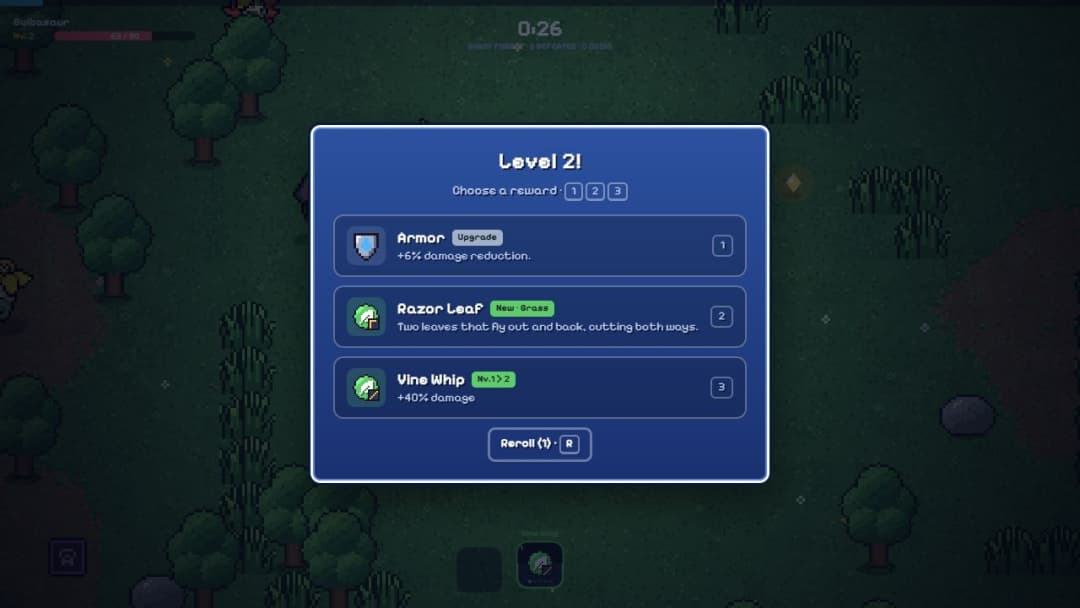
A familiar theme, a different set of questions
The recognizable creatures provide a starting point, but the practical loop is about moving, surviving and choosing upgrades as a run develops. Rather than inventing a story campaign or promising a particular atmosphere, it is more accurate to describe the contrast visible in the game: familiar characters paired with survival decisions and changing upgrade opportunities.
A player who enjoys adjusting a plan may find that combination appealing. Someone looking primarily for a traditional, story-led Pokemon adventure should not assume that the familiar names mean the same structure. This recommendation concerns the survival systems described in the current guide, not an endorsement of features that have not been verified.
Your learned moves are not all firing together
One rule is especially useful before judging whether a build works: normally, the selected attack slot is the one that fires. Learning several attacks does not mean that all four slots continuously cast together. If the screen is less busy than you expected, check the selected slot before concluding that an upgrade failed.
There is a second detail that makes this easy to misread. A projectile or lingering effect from an earlier attack can remain after you switch. Seeing two effects at once is not proof that two slots now attack indefinitely. Watch what happens before and after a switch, then connect the observation to the selected move.
The starter examples in the public guide include Charmander with Ember, Squirtle with Water Gun, and Bulbasaur with Vine Whip. They are useful examples for learning the interface, not a verified ranking. Choose a starting point, read its move description, and give yourself time to notice how switching changes the attack you are actually using.
Read an upgrade as a choice, not just a bigger number
Card values are easier to use when you separate the question they answer. A damage number describes something different from attack frequency, and neither automatically tells you how consistently an attack will connect in a particular situation. Per-hit damage should not be presented as measured damage per second.
Before selecting a card, ask three things: which move or stat changes, whether the effect helps your current attack, and whether you are choosing immediate improvement or preparing an evolution condition. That does not produce a universal answer. It does give you a reason for the selection that you can examine afterward.
A useful note might say, "I chose this card to meet the requirement for a later option." A much less useful note says only, "The card looked stronger." The first explains your intention even if the run ends before the evolution appears. That makes the next attempt easier to interpret without pretending that one run proves a build's overall strength.
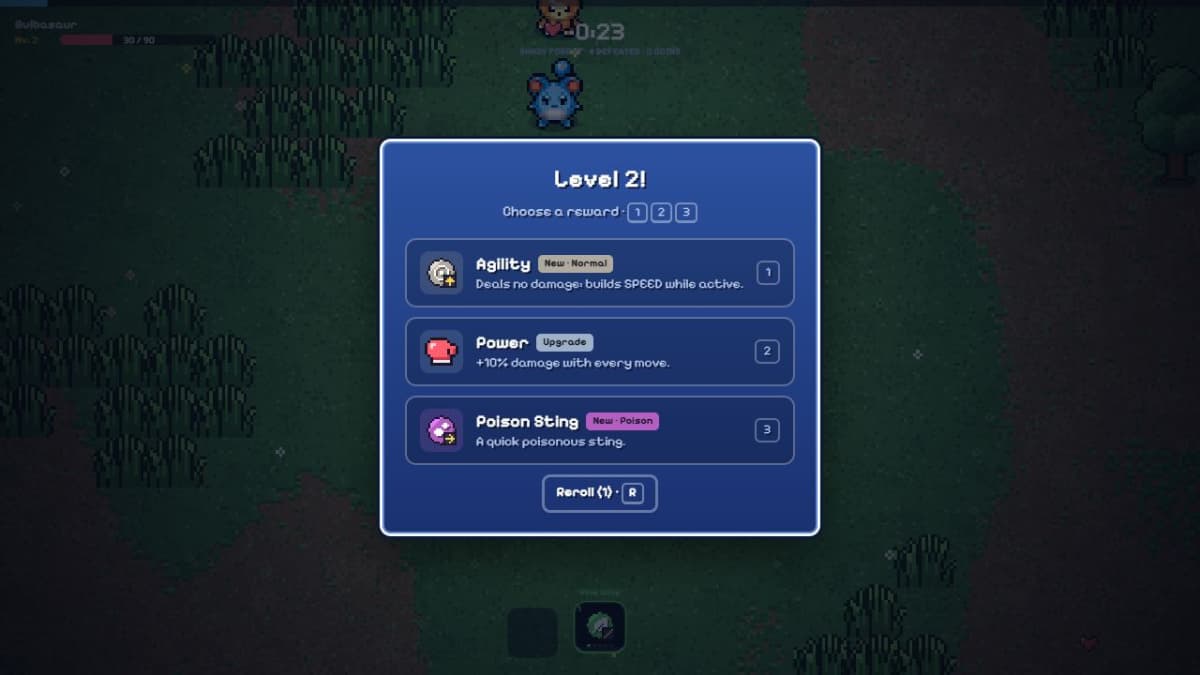
An evolution is a checklist, not a promise
Ember provides a concrete example. The published guide describes reaching level five with the move, acquiring the Power card during that run, and choosing the gold Fire Blast offer. Move level and a run-specific stat card are separate conditions. An upgrade made in a permanent menu should not automatically be treated as a substitute for that run's requirement.
If an option does not appear, work backward through the conditions instead of changing everything. Confirm the learned move, its level, the card acquired during the current run and the offer shown on screen. Also consider whether the guide and the current game version agree. A reference is useful precisely because it helps you ask these specific questions.
For disclosure, I maintain an independent fan reference, not the game. The PokeSurvivor evolution page records prerequisites and explains Bonds. Bonds combine moves already learned and can free a slot; they should not be confused with obtaining unlearned attacks or adding free levels.
Collection adds another reason to read carefully
Progression is not only about an individual run. Collection information introduces its own distinctions. A Pokedex entry is a catalogue record, not proof that a creature is unlocked on your account. Likewise, a rarity guarantee is not necessarily a guarantee of the exact species you wanted. Read the pool and the guarantee's scope before deciding what an outcome means.
Shiny encounters also need their own context. Wild, Rift and gacha acquisition routes should not be treated as one interchangeable process. The wild-encounter explanation requires defeating the shiny enemy rather than merely seeing it. No unverified probability is needed to make that distinction useful.
A sensible first-session plan
Start with one question: can you identify the selected attack and explain what your next card changes? On another run, focus on one evolution requirement. Afterward, record one observation and one uncertainty. Avoid changing the partner, attack plan and comparison conditions all at once if your goal is to understand why a result changed.
This is the kind of play PokeSurvivor seems best suited to recommending: incremental decisions, attention to requirements and curiosity about how a run develops. It may be a poor fit if you want every option ranked for you immediately or expect a guide to manage your account. Check the game's login and save arrangements before relying on guest progress.
The separate PokeSurvivor guide is a reference for those early checks, not a replacement for the game or its operator. The recommendation here is to learn enough to make your own choices, then use a guide when a particular condition is unclear. These notes reflect public guide material checked in October 2026, not a claim that every build has been personally tested.


评论
发表评论